Go farther, your way
Scooters make long outings easier for riders who can sit upright and steer. Transport chairs keep trips with a companion light and simple. Here's how to tell which direction fits.
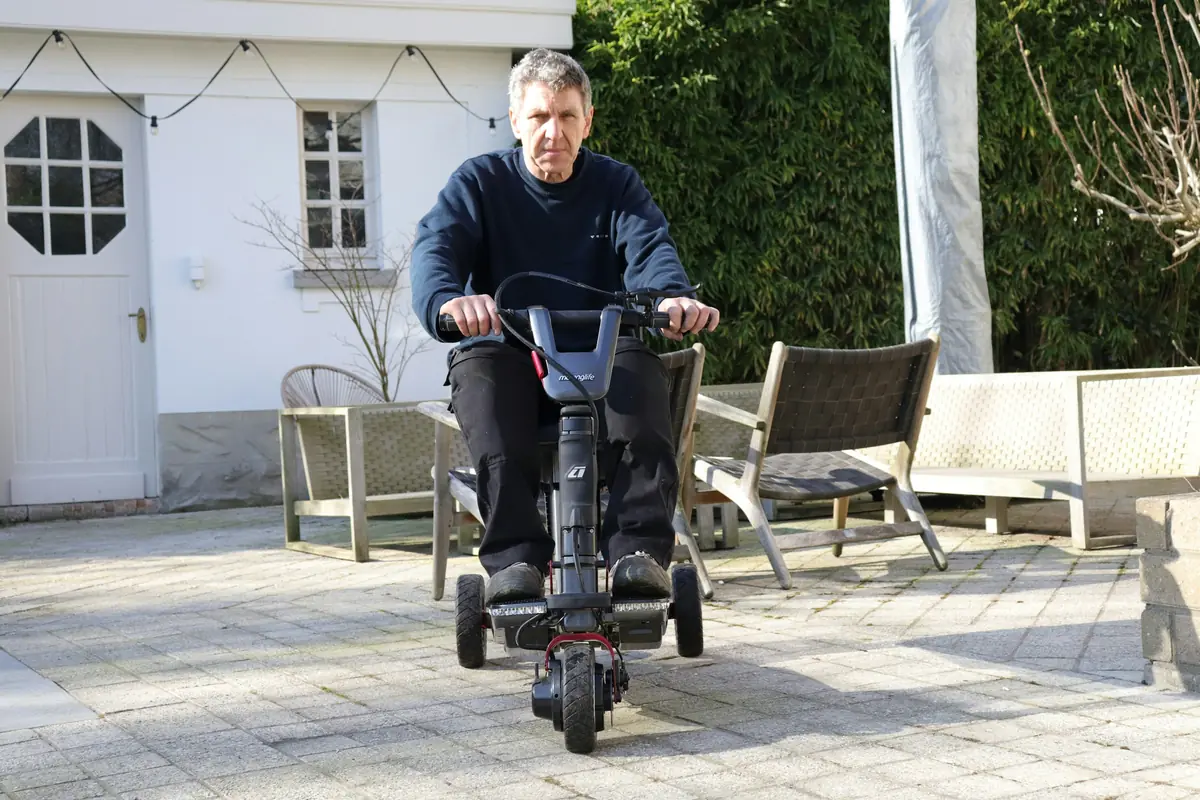
Built for the long way around
A scooter suits people who can walk short distances, transfer on and off a seat, and steer with handlebars — but find that longer walks drain the energy they'd rather spend on the outing itself. Think farmers markets, campus walkways, the zoo or a full lap of the mall.
Scooters come in compact travel styles that come apart for the car trunk, and fuller-size models with bigger seats and more legroom. Range per charge varies widely, so we talk about how far you usually go and where you'll plug in at night.
- Seat swivel and armrest options for easier transfers
- Adjustable handlebars for posture and reach
- Basket and accessory ideas for errands
- Charging and storage tips for apartments and garages
Pick the footprint that fits your routes
| Three-wheel scooter | Four-wheel scooter | |
|---|---|---|
| Turning | Tighter turns in shops and hallways | Wider turning circle |
| Stability | Good on smooth, level ground | More stable on slopes and uneven paths |
| Legroom | Usually more room for your feet | Floorboard can feel more compact |
| Typical use | Indoor-outdoor errands | Mostly outdoor rides |
Every model handles a little differently. Ask your clinician whether a scooter is a safe choice for you, especially if balance or vision is a concern.
Light enough to bring along every time
A transport chair is pushed by a companion instead of the rider. Small rear wheels and a light frame make it easy to fold, lift and tuck into a trunk, which is why families often keep one for appointments, airports and weekend plans.
Because the rider can't propel it alone, a transport chair works best as a travel companion rather than an everyday chair. We help you weigh the frame, seat width, brakes and footrests against who will be doing the pushing.

Five questions that point the way
- 01
How do you transfer?
Standing pivot, slide board or full assistance changes which seats and armrests work.
- 02
Where will you ride?
Store aisles, sidewalks, gravel paths or office halls each favor a different footprint.
- 03
How will it travel?
Trunk, back seat, hitch carrier or vehicle lift — measure before you fall in love.
- 04
Where does it live?
Plan a spot for storage and charging that doesn't block a hallway.
- 05
Who else handles it?
If a partner lifts or pushes it, their strength and height belong in the decision.
Keep your ride ready
A little routine goes a long way. Most scooter and power-chair batteries do best with regular charging, so plug in at the end of the day rather than waiting for the gauge to drop to empty. Keep the charger where you'll actually use it, away from foot traffic.
Check tires and brakes every few weeks, wipe off dust and rain after rides, and store your scooter indoors when you can. Texas heat is hard on batteries, so avoid leaving it in a closed car on summer afternoons. If something starts to feel different — slower starts, new noises, a pull to one side — call us before it becomes a bigger problem.
About coverageScooters and wheelchairs may be covered by Medicare, Medicaid or private insurance when medically necessary and properly documented. Requirements differ by plan; we'll explain the general process and the questions to ask.
Want to test the fit before you decide?
Call us to talk through your routes, your car and your transfers.